What is of Rococo, Riven, Roughcast?
Find the meaning and see photos of Rococo, Riven, Roughcast.
Plus more design terms defined: Ribbon Grain, Stripe Figure, Roe Figure, Ridge Tiles, Rip, Riser, Rising Butts, Rising Main, Rivelling, and Russian Constructivism.
Ribbon Grain, Stripe Figure, Roe Figure: (timber) is alternating dark and light strips in a quartered timber formed by the different reflections of light on the interlocked grain.
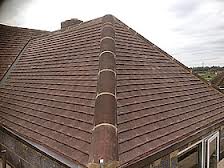
Ridge Tiles: Special tiles to cover the ridge of a roof.
Rip: To saw parallel to the grain. Not cross cut.
Riser: The vertical piece connecting two treads of a stair.
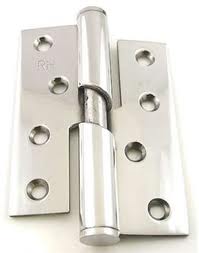
Rising Butts: Hinges, which lift the door as it opens so that it clears the carpet.
Rising Main: Mains electricity, gas or water supply pipes passing up through a building.
Rivelling: (paint) is wrinkles occurring in the paint film as it dries. It happens because the paint has been applied too thickly. To prevent it, ensure that the paint is applied to the normal film thickness.
Riven: To split.
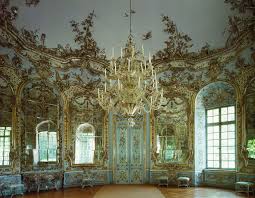
Rococo: Style of architecture and decoration in 18th century Europe characterized by elaborate sometimes asymmetrical curved forms and shell motifs.
Roman Mosaic: A terrazzo laid with pieces of marble or tile about 1 cm square in geometric patterns.
Roof Light: A skylight, dome light, northlight, southlight. It can be opening or fixed (a dead light).
Rose: A decorative plate or panel that a door handle or electrical flex may pass (ceiling rose).
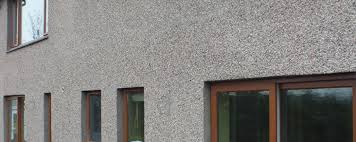
Roughcast: A final coat of plaster that is left rough often containing pebbles that may be left exposed. See pebbledash.
Rubber: (flooring) Rubber is made from natural or synthetic rubber, fillers and pigments. It is available in single colors with relief patterns or marbled. It comes in sheet form or tiles cut from sheets. It has good wear properties, is resilient and tough, warm and quiet underfoot. It can be loose laid on concrete.
Rubber Waffle: This is made from natural sponge rubber with a Hessian backing. It is the most expensive type of underlay. It provides strength, durability, resilience and firm support, and it will perform for a long time. The structures “waffle” or cellular construction provides spaces for air circulation that aids in minimizing dampness and condensation under carpet.
Rubber – Weld Joint : This was a joint first employed by Charles and Ray Eames in respect to furniture. It is made by bonding metal to rubber to wood. (plywood chair)
Rubbing: (paint effects) starting with a base coat of color, a glaze is rubbed over creating a soft cloudy film of color, which imitates the aged look of fresco paintings. It is ideal to use over stencils to slightly distress the look.
Rush, Seagrass and Maize: These are natural materials woven into squares and sewn together to form mats. They are ideal for temporary flooring.
Russian Constructivism: This was a post World War 1 art movement which originated in Moscow. It was a reaction against traditional fine art, especially sculpture. Constructivists explored new ideas for structuring three-dimensional forms. One theory was that form was not necessarily from solid mass alone, it could be suggested or outlined space. New industrial materials of the time, metal tubes, sheets of plastic, wires, sheets of glass, made their theories become true form. A well recognised Russian Constructivist in the furniture arena was Marcel Bruer, his example of the Wassily chair shows exposed and complicated framework in tubular steel.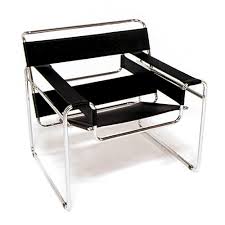
See more design definitions from Interiordezine.com
If you can’t find what you are looking for then try searching below.