Queen Anne Furniture
English Period Furniture – Queen Anne 1702 -1714
The gracious and comfortable furniture from the Dutch influence continued and the English craftsman were developing their own skills.
They had learned the foreign techniques and started to create a distinct English style. As the room sizes were now much smaller the pieces of furniture were less massive than those of previous centuries and the comfort was provided for in the chairs.
The chair is the single item that most typifies any one period and there is no exception with this period. The Queen Anne Chair is very well known and still popular today.
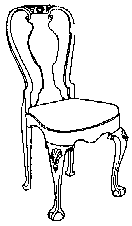
Queen Anne Chair c. 1715, note the escalloped shell on the knee and the well proportioned shape.
Queen Anne Chair c. 1715, note the escalloped shell on the knee and the well proportioned shape.It features curved lines with the top rail flowing into the back legs with no obvious joints. Stretcher rails were omitted, as they were now unnecessary with cabriole legs.
Walnut was still the most popular timber being used for furniture making, most of these articles featured cross-grained moldings, rounded friezes and with many veneered surfaces, marquetry was replaced with fine carving. The cross-grained molding was a feature that was exclusive to walnut work. It was not practical to make short-grained moldings in the solid, so a thin layer of cross-grained walnut was glued to a long grained backing. Time was then allowed for shrinkage and any splits were then filled in.
A greater leisure time saw the demand for small tables for tea, games etc. The Windsor chair dates from this period also.
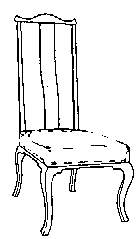
Queen Anne Chair c. 1710
Features of Queen Anne Furniture
- Pembroke table pivot top and drawer in end.
- Dressing mirrors designed to sit on toilet table, or writing table was the beginning of the dressing table.
- Tall boy – the extension of the chest of drawers, formed by placing one on top of the other.
- Graduation of drawers was purely English.
- Writing desk with sloping front and lopers to support.
- Twin pedestal desk has its origin in the knee hole writing table.
- The secretaire similar to the bureau in having a vertical front and bracket feet.
- Oyster pattern veneer.
- Cock beads, protection for veneer.
- Queen Anne Chair.
- Furniture relied on its graceful well-proportioned shapes.
- Carving almost disappeared or only on the escalloped shell on the knee.
- Unbroken curved lines.
- The back (spooned).
- Chair backs were considerably narrower at the back.
- Stuffed over seats or drop in.
- Wing chairs to protect user from draughts.
- Cabriole legs, sometimes terminated with a claw and a ball.
- Windsor chair with shaped seat.
- Most early Windsor chairs has front cabriole legs.
- Smaller folding tables including concertina tables with cabriole legs increased in popularity due to tea and card
- games.
- Difficulty in veneering large tops led to folding tables and four way matching.
- Bureau (secretaire) no drawers.
More information on Styles and Periods of Interior Decorating
Styles and Periods
Furniture History
Decorating Styles
Period Decoration
What is Style?