Carpet Construction
Carpet is an important element in interior design and decoration. It is an expensive item to purchase and it generally covers a large area of the home flooring. So choosing the right carpet is imperative. This area of the website goes in depth into everything about carpet, ranging from the products or yarns used , the types of construction of carpet, the different names or carpet types and the underlay and types of installation available. There is also a section on appearance pitfalls – just a few things to consider when selecting carpets for a project, commercial or residential. You should be able to find all you need to know about carpets here, starting with how carpet is constructed.
How Carpet is Constructed
It is important to understand the two main methods of carpet construction as it is a large financial outlay for the client and they will have endless questions on why one costs more than another? Why one has a looser look, firmer feel, multicoloured etc?
Today most carpets are produced by the tufting method of manufacture. It consists of hundreds of needles, which thread the yarn through the backing (jute or polypropylene), which forms loops or tufts to the required length.
The option then depending on the type of machine is to cut the loops to form a cut pile tufted carpet or leave the loops to form a looped pile tufted carpet.
The backing is then given a layer of adhesive coating to fix the tufts in position; another layer of backing is then fixed for added strength.
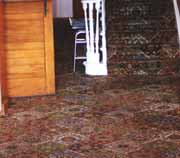
Axminster carpet
Traditionally carpets were woven on a loom. Many still are and are named from the type of loom that they are manufactured from. Axminster, for example, different coloured tufts are inserted into the weave from above so that they make up the pile but do not run in the back. By this method, many colours can be used and most Axminster’s are patterned. Wilton is another example, it is woven in continuous strands and only a small number of colors can be used on the loom. The pile yarn is woven so that the colors not showing on the surface lie on the back. It is a cut, looped or cut and looped pile. Patterned Wiltons are possible but at the high end of the quality and price range.
All woven carpets have the backing threads and pile woven at the same time, which means that the tufts are fixed in place. Weaving is a well-known method for producing patterns. Woven carpets are generally slower to make than tufted. You can generally distinguish between the two by viewing the back sides.
Both methods of construction are of a high quality and your choice will come down to the look that you require.
Carpets can be made by other methods, bonding and knitting. Bonded carpets are constructed by gluing tufts of pile directly onto a backing. Knitted carpets have a more complex construction method than Axminsters or Wiltons. Knitting the pile yarn and backing together achieve this type of method.
The combination of research and development in yarn and machinery married with specialist textile designers and the demand from the consumer is creating a burgeoning new wave of innovative and creative textures, styles, color combinations and patterns.
Just when you think you’ve seen everything – a new range is released and it opens up new doors for selecting schemes and creating wonderful new environments. The hardest job is keeping up with the choices. Overall the basics still apply and what you will learn here is a good grounding for appreciating the new product to come.
More Articles on Carpet
Types of Carpet Fiber – Natural
Types of Carpet Fibers – Man Made Synthetic