What is Electricity and What do We Need to Know as an Interior Designer?
What is Electricity?
Electricity is a major service that enters the home. This article will describe a basic electrical system and the different fittings and connections associated with it. It will also prompt you to think about the planning of rooms for electrical requirements as an interior designer.
Electricity
The electricity supply that enters your home will either be 230-240 volt or 110-120 volt system. For an interior designer’s purpose the type or size of the current is irrelevant, we are concerned with how the electricity is distributed throughout the house and the fittings that use it.
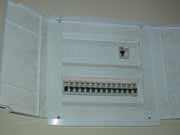
Distribution board.
Electricity will either enter the home via overhead wires or through an underground cable. The wires or cable will first connect to a either a main fuse and then meter board usually mounted outside the house (so the electricity company can monitor how much electricity is being used and charge the user accordingly) or in some countries directly to the main board and then on to a distribution board where the electricity is fed to circuits throughout the house to which fittings and appliances are either permanently connected to or are able to be connected to via a socket and plug system.
At the distribution board the circuits, which are the wires that you see in the walls and ceilings, are fed with power or considered live. Now to say that power is continually running through them is not quite correct. The power is in the supply station and lines that run across the country.
When you turn on an appliance or light connected to this system the power travels through the circuit to the appliance or light and makes it work. I.e. the energy (power) in the system has somewhere to go. The same can be said for earthing the power supply through a person and that person getting a shock. Electricity is always looking for a way to escape. That’s why you see all the cables are insulated. If they weren’t the electricity would immediately escape back into the earth or ground. That is a fairly simple explanation of a basic system.
To continue this topic Design with Electricity or select from below for related articles